Showing posts with label CATHOLIC. Show all posts

Friday, June 20, 2014

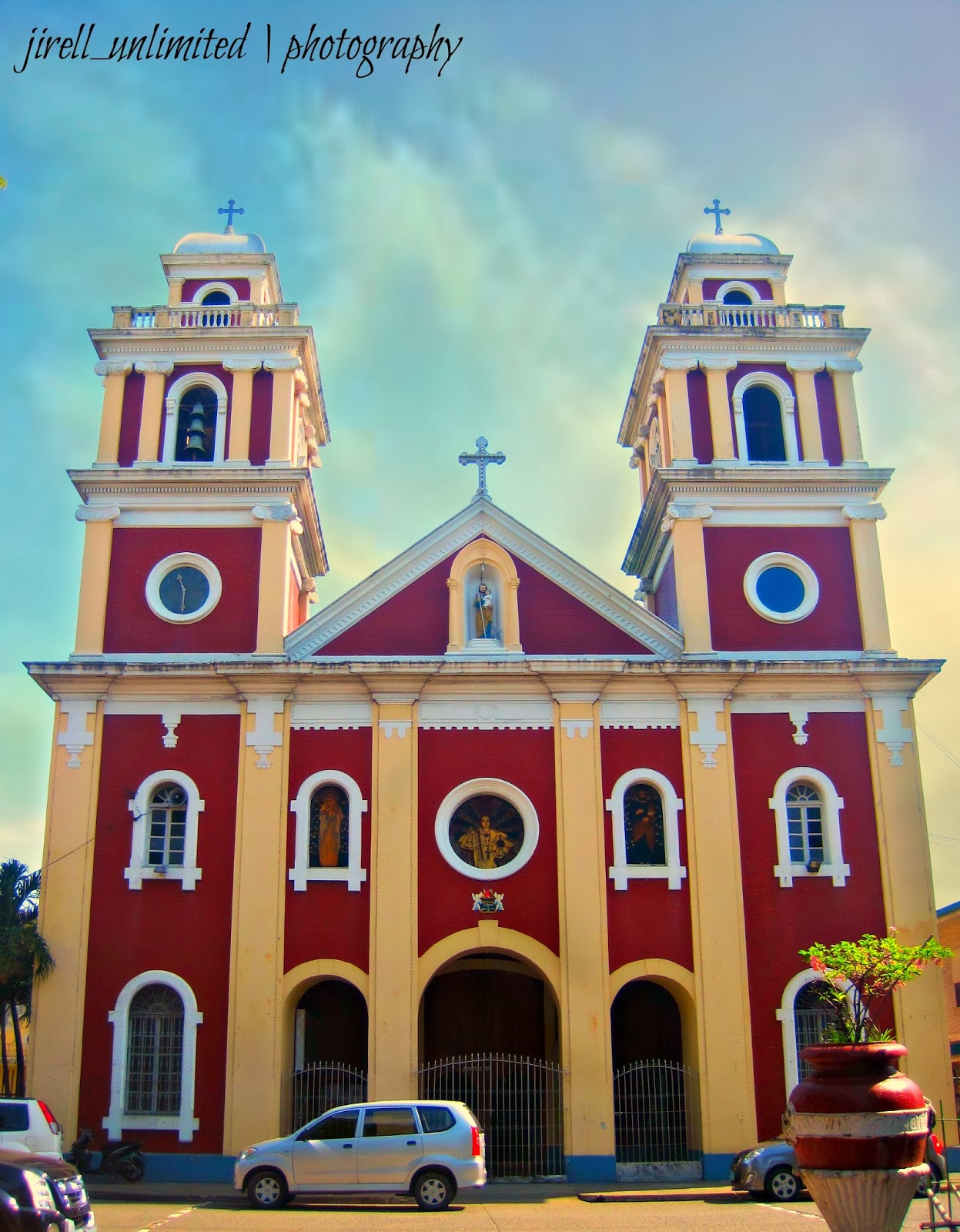
St. Michael the Archangel Parish- Mexico,Pampanga


St. Michael the Archangel Parish- Mexico,Pampanga;

St. Martin de Porres Chapel - Arayat, Pampanga


St. Martin de Porres Chapel - Arayat, Pampanga

CHURCH OF OUR LADY OF GUADALUPE - MAKATI CITY


CHURCH OF OUR LADY OF GUADALUPE - MAKATI CITY

HISTORY

Guadalupe Church or the Church of Our Lady of Guadalupe is located along Guadalupe EDSA in Makati City. One of the oldest churches in the Philippines it was declared an Archidiocesan Shrine in 2002 and a National Shrine in 2010.

The church dates back to the 17th century. It was originally constructed as a rest house and hermitage for the Augustinians. Initially named Our Lady of Grace, the church was later named Our Lady of Guadalupe in 1803. Our Lady of Guadalupe is the patroness of pro-life, representing the unborn, the sick, the aging, and the disabled. She is also the patroness of the indigenous native peoples, of those who are aspiring for children, of the pregnant, the elderly, and even photographers.
The 1937 marker placed on the church by the Historical Research and Markers Committee states that the foundation of the church and the monastery were first laid in 1601 and was completed in 1629. The structure suffered earthquakes in the years of 1645, 1658, 1754 and 1863. In 1839, it served as a sanctuary for the Chinese during their upheaval. In 1880, the church's roof collapsed due to an earthquake and was rebuilt in 1882 under the supervision of Rev. Jose Corugedo, Order of Saint Augustine. It also became an orphan asylum and trade school for the children of the victims of the cholera epedemic that hit the Philippines in 1882. The church convent was the site of the historic Escuela de Artes y Oficios. In 1887, it the residence ofy governor-general Rafael Izquierdo. In 1898, it was burned by Filipino revolutionaries. It was repaired by the Augustinians in 1970.


Church facade

The facade of the church of Our Lady of Guadalupe is an neo-Romanesque-Gothic in style. Tits massive vertical buttresses are complemented by round windows, niches with statues, and the semicircular arch of the main entrance. Two Doric columns support the cornice and triangular pediment of the facade, which softened by the leaf carvings that embellish the main entrance and other openings. The architave is also decorated with strings arabesque designs.

National Shrine

On 31 May 2010, the Archdiocesan Shrine of Our Lady of Guadalupe was declared a national shrine by the Philippine Catholic church. The petition which was first submitted on 5 August 2005, was approved by the Catholic Bishop Conference of the Philippines.


St. Clement’s Church, Iloilo City


St. Clement’s Church, Iloilo City

St. Clement’s Church boasts its modern design as both appealing and simple. The church’s facade is adorned with white balusters lining the balcony outside. Another exterior feature is the four-storey high tower located at the right side of the building. On the outside, the garden surrounding the church usually serves as an extra space for mass-goers when the church is full.

The interior of St. Clement’s is also simple, yet elegant. It provides an atmosphere for meditation and prayer as there are few distractions in the design. I find the lines and curves of the altar seem to lead to the big image of Our Mother of Perpetual Help at the center of the altar. I feel like the patterns are designed to lead us to the great image.

Saint Clement’s is managed by the Redemptorists or the Congregation of the Most Holy Redeemer with their Mother House located at left side of the church. The church was completed on 1931. The first Perpetual Novena to Our Mother of Perpetual Help in the Philippines and Asia was celebrated at the church on May 13, 1946.
The Mother House of the Redemptorists at La Paz; also used as a retreat venue
Saint Clement’s Church is located at La Paz, Iloilo City.


Sta. Catalina Church- ARAYAT PAMPANGA CHURCH


ARAYAT PAMPANGA CHURCH

Sta. Catalina Church was built in honor of St Catherine of Alexandria. Fr. Jose Torres had the present church restored in 1858. This was continued during the term of Fr. Juan Tarrero and completed under the supervision of Fr. Urbano Beduya in 1892. Several renovations have been conducted since then. The church measures 70 meters long and 16 meters wide, 12 meters high and was done in three-level Renaissance style facade.

SAN GUILLERMO PARISH CHURCH - BACOLOR PAMPANGA


San Guillermo Parish Church - BACOLOR, PAMPANGA


San Guillermo Parish Church is named after San Guillermo, the patron saint of Bacolor, Pampanga, the Philippines, where the church is erected. The church was originally constructed by the Augustinian Friars in 1576 – also the town's founding – with Fr. Diego De Ochoa, OSA, as the town's first parish priest.having been installed as such two years after.
In 1880, the church was destroyed by an earthquake only to be rebuilt by Fr. Eugenio Alvarez in 1886. On September 3, 1995, lahar flow from the slopes of Mt. Pinatubo which erupted into world notice on June 15, 1991, buried the church at half its 12-m height prompting its more than 50,000 town residents to evacuate to safer grounds in resettlement areas

History

Bacolor is one of the oldest towns in the Philippines. ^The first church was constructed by the Augustinian friars in 1576 on the lot of Don Guillermo Manabat, a rich landlord believed to be the founder of Bacolor. An earthquake destroyed the edifice and a new church was erected by Fr. Manuel Diaz in 1897. It has a central nave and well-lighted transept with windows. The main retablo, side retablos and pulpit are gilded with golf leaf. The richness of the docoration of Bacolor church depicts advanced stage of baroque and rococo. In spite of the 1991 eruption of Mount Pinatubo which half-buried the church on October 1, 1995, the structure is still being used as place of worship. It was already a world renowned tourist destination prior to the lahar tragedies; now more tourists flock to the church which remaining features are being preserved and maintained

Description-

The church boasts of having main retablo, side retablos and pulpit that are heavily gilded with gold leaves. The rich decorations of the church depict the Baroque style of architecture. Only half of the original facade of the church can be seen today due to the eruption of Mount Pinatubo in 1991 which half-buried the church. After the volcanic eruption, the town’s people painstakingly excavated the altar and the retablo and relocated it under the dome in order for the tall wooden retablo to fit. The retablos niches are filled with centuries- old statues which were saved from destruction of the lahar. The citizens of Bacolor take pride in their rich heritage which is why they carefully excavated the ornately carved main and side altars and restored in its immaculate condition. The church is already a world famous tourist destination prior to the lahar tragedies and present has remained being so

Friday, May 23, 2014

NATIONAL SHRINE OF OUR LADY OF PEACE AND GOOD VOYAGE (ANTIPOLO CITY)


NATIONAL SHRINE OF OUR LADY OF PEACE AND GOOD VOYAGE (ANTIPOLO CITY)

The statue of Nuestra Senora de la Paz y Buen Viaje was brought from Mexico to Manila by Governor Juan Nino de Tavora in 1626 and at his death in 1632 was turned over to the Jesuits for the Church of Antipolo. Nuestra Senora de la Paz y Buen Viaje was proclaimed Patroness of the Galleons. The statue crossed the Pacific, and returned, eight times on board the galleons of Acapulco: in 1641, 1643, 1645-46 on the San Luis; 1648-1649 on the Encarnacion; in 1650 on the San Diego; in 1851-1853 on the San Javier; in 1859-1662 on the San Jose and in 1746-1748 on the Nuestra Senora del Pilar. The statue of Nuestra Senora de la Paz y Buen Viaje was canonically crowned on November 26, 1926, by the Most Rev. Michael J. O’Doherty, Archbishop of Manila, on the Luneta, Manila, in the presence of at least one hundred thousand people.

SANTIAGO APOSTOL PARISH CHURCH a.k.a Betis Church


Santiago Apostol Parish Church - PAMPANGA

The 1607 Santiago Apostol Parish Church, commonly known as Betis Church or Parish Church of St. James the Apostle is a Baroque (heritage) Church, located in Guagua, Pampanga (Betis Area). It is a Spanish-era church declared a National Cultural Treasure by the National Museum of the Philippines and the NCCA (under R.A. 4896 as amended by P.D. 374 and R.A. 8492), on November 5, 2001 (one of only 26 churches in the country bestowed that honor). It is part of the Ecclesiastical Provinces of the Archdiocese of San Fernando. In 2009, the National Museum installed a marker of its 2005 Proclamation.
The Church is named after "Apung Tiago" or Santiago Matamoros ("Saint James the Moor-slayer"). James, son of Zebedee, (Aramaic Yaʕqov, Greek Ιάκωβος, died 44 AD), was one of the Twelve Apostles of Jesus. He was a son of Zebedee and Salome, and brother of John the Apostle. He is also called James the Greater to distinguish him from James, son of Alphaeus, who is also known as James the Less).

The main attraction of the Church is the original ceiling mural done by the famous painter Simon Flores (1839-1904). Not to be missed are the original Simon Flores painting of the Holy Family, the artesian well (dug in the 1800s) in the patio - the first well in the country to be so situated, and the rare betis tree nearby, donated by Prof. Randy David, a sociologist and native of the town. A two-minute walk from the church is the restored David House, ancestral home of Randy David, which they christened Bale Pinauid or Bahay Pawid.
The Philippine National Commission for Culture and the Arts (NCCA) has designated the conservation and protection of more than 30 other Spanish-era churches to be of utmost importance. These were registered as National Cultural Treasures. These churches were given priority status not just due to their historical value, but also based on the geographic representation of various regions across the nation, and include Santiago Apostol Parish Church in Betis, Guagua, Pampanga.

As one of the Baroque Churches of the Philippines, the Santiago Apostol Parish Church Parish Church has been at the forefront of Philippine history since their construction in the 1500s. During the time of Spanish colonial rule, the Church and State worked hand in glove. They had served the Catholic church in the archipelago and as the political backbone of Spanish colonial rule.

The unique design of the churches reflects the integration of Spanish and Latin American architecture to indigenous architecture of the Philippines, including a fusion with Chinese style. The Church's political power of that period manifests in the architecture. They had been designed to withstand attacks during revolts and rebellions, giving the Churches the appearance of fortresses. The blending of religion and military portrays the manner Spain saw its situation in the Philippines. The Church of La Nuestra Señora de la Asuncion, located on top of a hill, served as a citadel during times of crisis, providing the best example of the blend of purposes in the architecture. Church of Santo Tomas de Villanueva withstood the occasional attacks from Muslims coming from the south.

The Philippines resides within the Pacific Ring of Fire, calling for structures that could withstand the tremendous earthquakes that rock the region. Powerful buttresses and foundations gave the churches the support they needed to survive earthquakes intact. Although occasionally damaged seriously, the Church restored them each time. The Church of San Agustin has the most imposing of those buttresses, while the Church of San Agustin, Manila, the only structure in Intramuros (the southern district of Manila) to survive World War II, demonstrates the best example of the strength of that architecture. The unique architectural style became known as Earthquake Baroque.

Aside from the 4 churches designated as a World Heritage Site, the Philippine National Commission for Culture and the Arts (NCCA) has also designated 26 Spanish-era churches for conservation and protection. They have been registered as National Cultural Treasures. They have been given priority status for their historical value as well as serving as the geographic representatives of regions throughout the nation and include the Santiago Apostol Parish Church Parish Church

HIstory of the Betis Church


The baroque-inspired Betis Church was built around 1660 and it was headed by Father Jose de la Cruz. The preliminary structure was made out of light materials which was composed mainly of wood and stucco. Fire broke out within the church several times due to these light materials so it was finally built with concrete materials in 1770.

In the last quarter of 19th century, Father Manuel Camañes dug an artesian well on the north-side of the church which served as a source of potable water not only for the Betis townsfolk, but to the other nearby towns as well. On the other hand, the present-day concrete fence with caryatids was built in the 2nd quarter of the 20th century.

In 1908, the rectory of the church was burned with fire and all the documents about baptism and other historical catalogues of the church turned into ashes.

Beautification of the interior part of the church was extensively done by the last Spanish priest named Father Santiago Blanco in 1939. The ceiling paintings were repainted by a native of San Agustin named Macario Ligon. His assistant named Victor Ramos, who was in his teen years then was also the one who restored these paintings in the 1970s.

During the Spanish-Colonial period, Betis is an independent town which has its own autonomy as a municipality. But due to migration of its inhabitants to the nearby Guagua in the American Period, it was merged to this town in 1904 under the Act 943.

Today, although part of the municipality of Guagua, the Betis church has its own parochial priest and has its patron saint named St. James the Grea


Wednesday, April 9, 2014

PARISH CHURCH OF NUESTRA SENORA DE LA PORTERIA - DARAGA, ALBAY


PARISH CHURCH OF NUESTRA SENORA DE LA PORTERIA - DARAGA, ALBAY


As mythical as the tale that the Daraga church was built by young maidens or Daraga is the common belief that it was built after and on account of the eruption of Mayon Volcano that buried the town of Cagsawa in 1814. The historical truth is that it began to be built more than 40 years earlier, in 1773 to be exact.
Historical records show that way back in 1772 some people from Cagsawa asked permission from the National Government to transfer their town and church to a nearly settlement known as Daraga, then a sitio of the town of Albay.

The request was granted by the Spanish Governor General, Don Simon de Anda y Salazar in a letter dated June 12, 1772, wherein he instructed the Alcade Mayor of the Province of Camarines to supervise the transfer of the town of Cagsawa to the place of Daraga so that the town be formed with streets near the church that is to serve as the center for the benefit of the natives.

The order must have been implemented right away. There is no better proof that the official seal of the municipality of Daraga that bears 1772 as the year engraved on it.

The church was still under construction and on its way to completion in 1777, as can be gathered from a letter written by the Franciscan Provincial to the Governor General, asking that it be finished and the latters letter of instruction to the Alcalde Mayor to find our whether the construction of the church is finished and in case it is not, to promote its completion with the greatest vigor. Whether it was completed before the fateful eruption of 1814 has not yet been ascertained.

The next thing we here about Daraga church is that it was finally consecrated in 1854, the year Pope Pius 1X declared the dogma of the Immaculate Conception of the Blessed Virgin Mary.

The American forces bombed the church during the World War II. The roof was completely blown up and the right wing and wall partially destroyed. Right after the war, it was hurriedly reconstructed. Then, it deteriorated very fast. In 1971 it underwent another complete reconstruction and remodeling of the interior especially the altar to make it conform to the norms of the celebration of the Liturgy as renewed by Council Vatican 11. The reconstruction was happily finished before the bicentennial celebration on December 8, 1973.

Eighteen years later in 1991, to be faithful to its structural design, the altar was returned to its original position.

Saturday, November 9, 2013

SAN JOSE CHURCH


San Jose Church (Iloilo City)

The first church in Iloilo was built by the Jesuits around 1607 to serve the needs of the military stationed in Punta, as Iloilo was then called. However, on 29 April 1617, the Augustinians established San José, a house of the order. They held San José until 1775 when administration was given to the secular clergy. In 1868, Iloilo along with La Paz (Loboc) was given to the Augustinians in exchange for Jaro which had become the seat of the newly founded diocese. Fr. Mauricio Blanco was named prior in 1873 and he started enlarging and repairing an older church built of light material. Later he decided to build a new church of stone and brick, after the Miguelete church of Valencia del Cid (Spain). However, he was unable to fulfill his plans, and stopped when he had completed two stories. He finished the church, added two towers one with a clock and barometer and built a convent. The towers were begun on 14 November 1893. The church was repaired in 1902 under Fr. Manuel Diez, restored in 1945 under architect and engineer Mariano Cacho following plans by Fr. David Caseres. The altars were gilded by Fr. Jesús Fernandez. During World War II, the church was saved from being bombed by the Americans after they received information that Japanese were not holed in the church as they were previously informed. Between 1980-82 the church was renovated, a new marble floor was laid, under the direction of poet-writer, Fr. Gilbert Centina. San José is one of the few parish in the Philippines still under the Augustinians.


http://heritageconservation.wordpress.com/2006/07/27/san-jose-church-iloilo-city/

Monday, July 22, 2013

ST. CLARE MONASTERY


ST. CLARE MONASTERY - KATIPUNAN, QUEZON CITY

Santa Clara was the childhood sweetheart of St. Francis De Assisi. She founded a Franciscan order of women known as Poor Clares whose local house is Real Monasterio de Santa Clara (Royal Monastery of Saint Clare), the oldest cloister in the Philippines. She was the patron Saint of Television for the catholic Church. Her feast day is on August 11.


Monasterio De Sta. Clara was founded by Mother Jeronima De La Asuncion (May 9, 1555-Oct. 2,1630), she was the foundress of the first Catholic Monastery in Manila and the Far East. 


As early as 1598, the people of Manila desired to have a Poor Clare foundation in their midst. When Mother Jeronima learned about it, she volunteered to become the foundress. Her Franciscan superiors accepted her proposal with enthusiasm, but due to some problems between the ecclesiastical and civil governments in the Philippines, she had to wait for 22 long years before she was finally allowed to come in the Philippines together with the nine Poor Clares nuns. The nine foundresses and their chaplain and head of the mission, Fr. Jose De Santa Maria, OFM arrived in Manila on August 5,1621, after an eventful voyage lasting one year, three months and nine days. The sisters were the first woman missionaries to reach the Philippines, and for that matter, the Far East.

Mother Jeronima steered the course of her community's history for nine years until her death on October 2,1630 at the age of 75. Her life of holiness inspired and strengthened the people to persevere in their faith.

In the intervening years, the sisters in Intramuros were forced to transfer from one place to another due to various circumstances. They evacuated to the Franciscan Convent in Sta. Ana. In 1896, during the Philippine Revolution, they again transferred to the Franciscan Convent in Sampaloc. In 1941, they also transferred to the VOT Convent in Solano, Intramuros, then to St. Anthony's Orphanage. During the last days of the war in 1945, the American soldiers were forced to bombard the monastery in Intramuros because Japanese soldiers sought feruge within convent walls. They transferred to their present monastery in Quezon City on February 20,1950.

Picture
In this new location, devotees still continues the tradition of offering eggs. In Castillian Claras means "short interval of fair weather on a rainy day. In Spanish, clara pertains to the albumen (white eggs) of the egg. In effect, Claras (white eggs) is being offered to Santa Clara to keep a particular date clara (fair in weather). They said that the eggs that are being offered will be made into bread and will give it to the poor people. In their office they provide pens and papers where you could write your prayer intentions and drop in the provided boxes and ask for the nuns of the Order of Saint Clare of Assisi to pray for them as well for good weather.


Sunday, July 21, 2013

OUR LADY OF THE ABANDONED PARISH - MARIKINA CITY


Our Lady of the Abandoned Parish - Marikina City


The Diocesan Shrine and Parish of Our Lady of the Abandoned, also known as Nuestra Señora de los Desamparados or Ina ng mga Walang Mag-Ampon, Marikina City, is a Roman Catholic church and the home of an image of the Virgin Mary venerated locally, which has received Papal recognition.


Early year

The supervision of Catholic faith in Marikina started when the town was again ceded by the Augustinians from the Jesuits. On March 10, 1687, Governor Gabriel Cruz Elasque ordered the transfer of Marikina to the care of the Augustinians and merged with the ministry of San Mateo. He instructed Don Juan Pimentel, Alcalde de Tondo, to vacate and demolish the visita of Jesus de la Peña due to the turbulent Marikina River which floods the area during rainy season. The visita cannot accommodate the growing population of the community. This finally led the friars to cross the river to find a higher place for a bigger church which is now where the present church stands and subsequently made an independent parish in the year 1690.
The first image[edit|edit source]
On October 23, 1791 the church was consecrated by the Archdiocese of Manila for the Virgin's said title so that it could not be used for any secular purpose. In 1898, during the Philippine–American War the first image was burned together with the pertinent records on the devotion in Marikina. Last 1902, a new image was created which is presently venerated in the parish.

A miracle[edit]
The devotion became well known because of miracles attributed to the image. It was said that during World War II when the Japanese army bombarded the city a bomb fell near the bell tower of the church but did not explode, which was said to be a miracle.[citation needed].


Friday, July 19, 2013

STA MONICA PARISH - PANAY, CAPIZ


The Sta. Monica Parish - Panay, Capiz


HISTORY


The Parish of Panay was established by the Spanish missioneries in 1581, which had six(6) visitas. The Christian Faith in the island of Panay, Philippines was the first to evangelize the Sta. Monica Parish Church which now stands as a Historical Landmark. In 1566, Padre Martin de Rada, the augustinian missionery, proclaim the Gospel in the island at the riverbank of Bamban, which now known as the town of Panay, Capiz. The original structure of the church was built during the term of Fr. Manuel Lopez, between 1692 and 1698, and was rebuilt by Fr. Manuel Murguia in 1774. After the destructive typhoon of 1875, the famous Augustinian builder, Fr. Jose Beloso renovated the stone church in 1884. Fr. Lesmes Perez, restored it in its beautiful grandeur in 1895 from the aftermath of the typhoons of 1874 and 1875. Don Juan Reina Cast the Largest bell in Asia and 3rd biggest in the world. The "Dakong Lingganay"(meaning "Big Bell"), it was made from seventy(70) Sack of coins donated by the townpeople and measures seven(7) feet in diameter, five(5) feet in height with a weight of 10.400 kilograms. It carries a meaningful inscription which mean "Soy la vos de Dios que llevarey ensalzare desde el principio hasta fin de este Pueblo de Panay para que los fieles de Jesus vengan a esta casa de Dios a recibir las gracias celestiales" (meaning " I am God's voice which shall echo and praise from one end to the other of the town of Panay, so that the faithful followers of Christ may come to this house of God to receive the heavently graces."). Fr. Francisco alba was the first Filipino priest who served as the Parochial Vicar of the Parish of Sta. Monica. The National Historical Institute in its Resolution No. 3, series of 1997, declared the Sta. Monica Parish Church as a Historical Landmark.


Thursday, July 18, 2013

BARASOAIN CHURCH


Barasoain Church - Malolos Bulacan


Barasoain Church (also known as Our Lady of Mt. Carmel Parish) is a Roman Catholic church built in 1630[1] in Malolos City, Bulacan. Having earned the title as the Cradle of Democracy in the East, the most important religious building in the Philippines,[2] and the site of the First Philippine Republic, the Church is proverbial for its historical importance among Filipinos.

Founded by Augustinian Missionaries in 1859, the church is also renowned for its architectural design and internal adornments.[1] The original church was burned during the outbreak of the Philippine Revolution however, it was renovated. It is about 42 kilometers away from Manila.
The church recorded some of the important events occurred in the country. While it has been a temporary residence of General Aguinaldo, three major events in Philippine History happened in this church: the convening of the First Philippine Congress (September 15, 1898), the drafting of the Malolos Constitution (September 29, 1898 to January 21, 1899), and the inauguration of the First Philippine Republic (January 23, 1899).[3] By Presidential Decree No. 260, the church was proclaimed as a National Shrine by President Ferdinand Marcos on August 1, 1973.[4] Unusual for newly elected presidents in the Philippines, the church has been a venue in an inaugural affairs. General Emilio Aguinaldo and former president Joseph Estrada were the only two who have been inaugurated in the place.[5]

Historic Barasoain used to be independent from Malolos and this explains the presence of a stone church here. The Parish Church of Our Lady of Mt. Carmel had its first stone edifice in 1871 to replace a temporary one but was burned later. In 1885, the current structure was started while the belltower was constructed in 1889. The church was the scene of the proclamation of Philippine Independence and recently, where Joseph Estrada took his oath of office.
The facade has Neo-Classic touches and its rounded pediment is echoed by the arches and rose window at the lower part

The term "Barasoain" was derived from a place in Spain to which the missionaries found the place in Malolos in striking similarity. When the Spanish-Filipino revolution broke-out, revolutionaries coined the term "baras ng suwail", which means "dungeon of the defiant"

Barasoain Church was founded by Augustinian Missionaries. Built on the 1630, the original church was destroyed in a fire in 1884 prompting various renovations. However, the structure itself was very similar to the Church during the Spanish era.
The church consists of two structures, the church and an adjoining convent. While the left outside of the Church is a medieval bell tower, the entrance of which has bamboo arches linings and its sides are rose windows. Its architectural design is simple however, it has paintings in its ceilings and domes which makes it look bigger than its actual size. The altar in the inside has glimmering lights despite the church's historical reputation.[7] Aside of which, floral motifs, frescoes of angels and saints embellish the interior of the Church. Right in front is a convent which has a museum dedicated to the three historical events that took place in the church.[3] While the Barasoain Church Ecclesiastical Museum has been a repository of important artifacts found within the vicinity of the province,[8] the Church's Historical Landmarks History Museum concerns on preserving the fruits of the Philippine Revolution as well as freedom and the Filipinos' heritage of democracy.

ST. MARTIN OF TOURS PARISH


St. Martin of Tours Parish - Bocaue, Bulacan

St. Martin of Tours Parish

The Franciscans built the church in 1578 that was replaced by Fr. Pedro De los Santos (OFM) with a stronger structure in 1606. Afterwards, the church underwent a series of rebuilding and improvements until it was destroyed by fire in 1868. It was rebuilt and razed again during the Philippine Revolution of 1898. The church has been rebuilt and restored several times since then.
A famous river festival held in honor of the miraculous Cross of Bocaue (KrusngWawa). During the fluvial procession, devotees ride in the "pagoda" and douse each other with water.


MALOLOS CATHEDRAL


Malolos Cathedral - Basilica Minore dela Nuestra Señora de Inmaculada Concepcion

Malolos Cathedral, also known as the Basilica Minore dela Nuestra Señora de Inmaculada Concepcion (in Spanish) or Minor Basilica of Our Lady of Immaculate Conception (in English), is the ecclesiastical seat of the Diocese of Malolos in the Philippines. Note: Minor Basilica of the Immaculate Conception or the Manila Cathedral is the seat of the Archbishop of Manila.

The Augustinian missionaries, headed by Fr. Diego Ordonez de Vivar, arrived at barrio Canalate in June 1580. From a small chapel near Canalate River, a bigger church was built which was recognized in the records of the Augustinian chapter of 1580. Due to the frequent submerging of its first location,they moved the church to another location facing Malolos River and created it as the center of the pueblo in 1591 (the present location of the church). Augustinians placed under the mantle of the Immaculate Conception.Malolos Church was initially parish of Encomienda de Malolos made as the town parish in 1580.Initially built from light materials in 1580-1591,later the church and convent were enlarged by Fr. Roque Barrionuevo in 1691. In 1734, the church was built with stronger materials by Fr. Fernando Sanchez. Fr. Juan Meseguer finished this project in 1740 and Fr. Jose de Vivar applied the finishing touches in 1753. However, both the church and the convent were destroyed by fire in 1813. The construction of the present church begun in 1819 with Fr. Melchor Fernandez. This prolific builder was also responsible for the addition of arches to the convent; the fortification of the belfry (to accommodate the installation of a clock); and the construction of the bridge connecting Malolos with Barasoain. However, the buildings were destroyed by a strong earthquake in 1863. Fr. Ezekiel Merino undertook the reconstruction of the collapsed structures which lasted until 1872. Another severe earthquake took place in 1880 which destroyed the convent. Fr. Juan Tombo began the restoration of the convent in 1883. It was completed in 1884 by Fr. Felipe Garcia.


OUR LADY OF PIAT CAGAYAN


OUR LADY OF PIAT CAGAYAN

Our Lady of Piat (formally: Nuestra Señora de Piat,) is a 16th century Roman Catholic icon of the Blessed Virgin Mary and the central figure at the altar of her shrine in Piat in the province of Cagayan, Philippines. Locally known as the patroness of the town, it is one of the most venerated Marian images of Mary in the Republic of the Philippines and is referred to as the Mother of Cagayan. The image of Our Lady of Piat is one of the most revered images among Catholics. Flocking everyday to the shrine are devotees queueing to touch the image’s feet seeking her intercessions. Her devotees include the rich and powerful who spare no expense at showering the Blessed Virgin’s shrine with donations and gifts.


She was originally called Nuestra Señora del Santissimo Rosario (Our Lady of the Rosary) by the Dominican friars. The lady has been attributed to many miracles including an end to a drought that threatened famine in the Itawes region. Piat is now dubbed as the "Pilgrimage Center of Cagayan Valley" because of the thousands of devotees and tourists who come here to pay homage. She continues to be the source of inspiration and object of devotion of many Catholics in the region.

The lady is also called as the "Black Virgin Mary" because of its color being brown or "muy morena". That was referred to as the appealing characteristic of the Blessed Virgin.[1]
Our Lady of Piat is one of the oldest Marian images in the Philippines. On June 20, 1954, in a ceremony led by Papal Delegate Egidio Vagnozzi, she was named “Queen of Heaven and Earth”. The Ibanags call her “Yena Tam Ngamin” (Mother of Us All) and to the natives of Piat, Cagayan, she is known as “Apo Baket” (Grand Matriarch).


NATIONAL SHRINE OF OUR LADY OF THE CANDLES


National Shrine of Our Lady of the Candles - JARO , ILOILO


The Jaro Cathedral, formally Jaro Metropolitan Cathedral and the National Shrine of Our Lady of the Candles (Spanish: Santuario Nacional de Nuestra Señora de la Candelaria), is the cathedral for the Roman Catholic Archdiocese of Jaro. It is located in district of Jaro of Iloilo City, in the province of Iloilo, on the island of Panay, in the Western Visayas region of the Philippines. It is under the original patronage of Saint Elizabeth of Hungary.

The shrine is constructed of Romanesque revival architecture.
A distinctive feature is that the bell tower is located across a busy street, on the Jaro Plaza. Typically, belfries are built next to their churches. In this case, the tower was adjacent to an earlier church, but an earthquake destroyed the church and left the tower.
Another distinctive feature is the stairs attached to the front facade of the cathedral, over the main entrance, leading up to a shrine above the main entrance to a statue of Our Lady of the Candles, as can be see in the picture at the top of this article.
The original cathedral was built in 1874 by the first Bishop of Jaro, Mariano Cuartero, O.P. It was destroyed by an earthquake in January 1948 and later repaired in 1956 by the first Archbishop of Jaro, Jose Maria Cuenco. The current parish rector is Most Rev. Gerardo Alminaza, Divinitatis Doctor.
Surrounding the cathedral and sharing the same general location are a variety of archdiocesan and parish offices. There is also a perpetual adoration chapel. About a block away is the archdiocesan seminary and across the plaza is the archbishop's palace, or official residence.
In January 2012, the Catholic Bishops' Conference of the Philippines approved the cathedral as the National Shrine of Our Lady of Candles.

OUR LADY OF PEñAFRANCIA


OUR LADY OF PEñAFRANCIA - NAGA CITY

The Peñafrancia Basilica Minore is located on the outskirts of Naga City--also known as the Piligrim City and Queen City of Bicol--in the Bicol Region of the Philippines. The Image of Our Lady of Peñafrancia is enshrined in her sanctuary at the Basilica Minore, Balatas Road Naga City. The current rector is Rev. Msgr. Rodel Cajot, PC, STD, appointed in 2011.


History 

The concept for the building came from the late Archbishop Pedro Paulo Santos y Songco in 1960. Construction began on April 18, 1976, but was delayed for a number of years due to financing problems and was not completed until September 1981.
On May 22, 1982, it was dedicated as The Church of Nuestra Señora de Peña de Francia and it wasn't until May 22, 1985 that the church was given the title of "Basilica Minore" from Rome after a request from the third Archbishop of Caceres, Leonardo Z. Legaspi, O.P., D.D.
The Peñafrancia Basilica Minore houses an image of the virgin Mary that was sculpted in 1710. It was commissioned by Miguel de Cobarrubias, who moved to the Philippines from Spain with his family and believed that the virgin Mary had helped him numerous times in his life. The image was housed in a small chapel until the Basilica Minore was built constructed.
Archbishop Pedro P. Santos noted that the devotees and pilgrims kept increasing through the years. In 1960, he dreamt of building a basilica to give honor to Our Lady. Shortly after, through the meditation of the Archbishop Emeritus Teopisto V. Alberto, D.D. and the Association of Our Lady of Peñafrancia, Mr and Mrs. Macario Mariano donated a three hectare lot at barrio Balatas. Bishop Concordio Sarte initiated the ground work of the construction. Blessing and laying of the cornerstone was held on Easter Sunday, April 18, 1976 having Church dignitaries led by Cardinal Jaime Sin and prominent Bicolano sponsors.


KALIBO CATHEDRAL


KALIBO CATHEDRAL


In 1581, the Augustinians established a mission in Kalibo. In 1680, the Kalibo was erected a parish under the advocacy of the San Juan Bautista Then, the town site was at Barrio Laguinbanwa in Numancia, some two kilometers distant from the present site of Kalibo.


Here at Laguinbanwa, a church was erected but when town transferred site to its present location, another church was constructed at the new site (1804). Both church and convento were completed completed in 1826. But tragedy struck the complex when on 24 May 1885 however, a big fire razed the town including the convento. The convento was reconstructed the following year (1886).

After the World War II, in 1947, Gabriel M. Reyes, Archbishop of Cebu and later Manila, personally took a hand reconstructing and remodeling the church. The church “On 14 June 1990, an earthquake measuring 7.1 in the Richter Scale hit Panay Island at 3:41 P.M., “The epicenter was located at 11.34 North latitude; 122.10 East longitude, in the vicinity of Culasi, Antique. The depth was computed to be 15 kilometers,” reported Philvocs. Damage to property included “The Catholic Church of Kalibo that is made of bricks (which) suffered cracks on its walls.” During the incumbency as bishop of Gabriel V. Reyes, a nephew of the former archbishop of Manila restored and improved the church to accommodate the many pilgrims who come to celebrate the feast of the Santo Niño.

The church of Kalibo is of modern construction but retains some of the lines characteristic of the post war church, which in turn alludes to earlier church styles. The center of attention in this church is the image of the Santo Niño, in whose honor the annual Ati-atihan is celebrated. (Panublion)